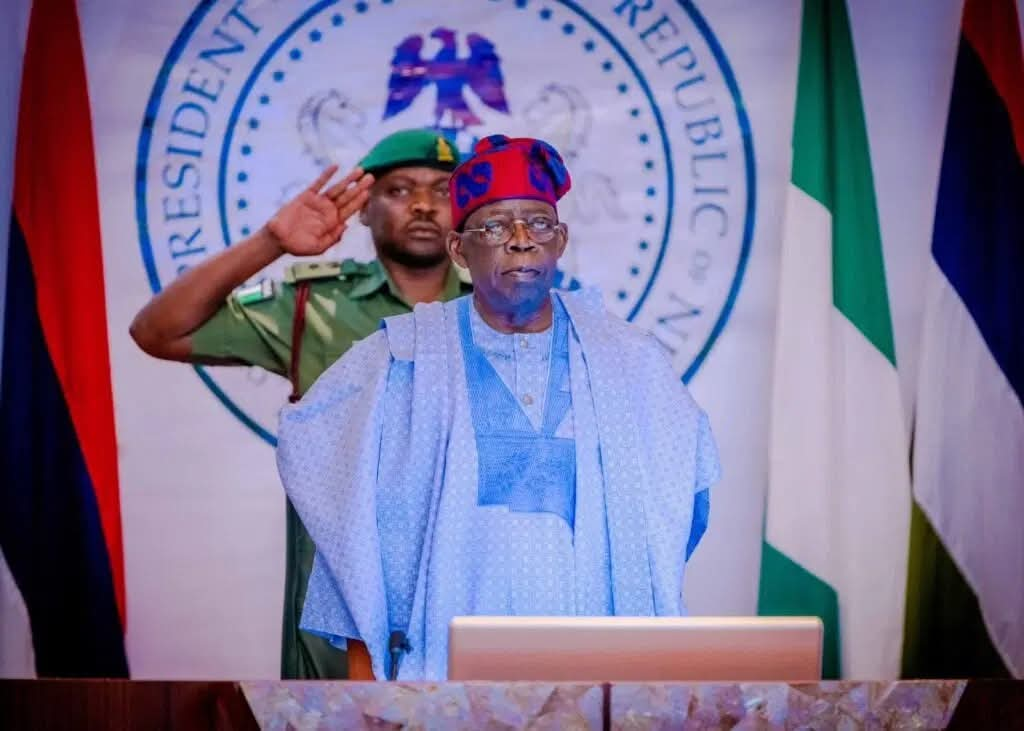
President Bola Tinubu’s 66th Independence Day address was largely centred on Nigeria’s economic transition from reform and stabilisation to what he described as an “age of prosperity.”
President Tinubu also addressed the cost of living, jobs, agriculture, poverty, social support and the country’s future direction.
Here are the 12 major issues the President focused on:
1. Nigeria’s Journey Since Independence
Tinubu reflected on 66 years of nationhood, acknowledging Nigeria’s experience of war, military rule, economic crises, insecurity and political upheaval while celebrating the resilience of Nigerians.
2. Economic Reforms
The President strongly defended the reforms introduced since 2023, arguing that they confronted longstanding economic distortions rather than creating them.
“Our reforms did not create the weaknesses in our economy. They confronted them.”
3. Nigeria’s Economic Recovery
Tinubu said the economy had grown by more than four per cent this year, with both the oil and non-oil sectors contributing to what he described as renewed stable growth.
He also cited falling inflation, rebuilt foreign reserves and improved foreign exchange stability.
4. Record Non-Oil Exports
The President highlighted Nigeria’s more than $6 billion in non-oil export revenue in 2025, describing it as the country’s highest ever and evidence of increasing activity by Nigerian businesses.
“This is real money being made by real Nigerian businesses.”
5. The Cost of Living
Tinubu identified bringing down the cost of living as a major priority for the next phase of his administration.
“Our priority is to bring down the cost of living,” he said.
He said this would be pursued by reducing the cost of producing and transporting goods.
The President outlined plans to expand mechanised irrigation, dry-season farming, access to seeds and fertiliser, agricultural mechanisation, storage and transportation.
He said the aim was to increase production while reducing losses between farms and markets.
7. Infrastructure and Lower Transport Costs
Tinubu linked roads, railways and ports to lower prices, saying better infrastructure would connect farms and factories to markets more efficiently.
His argument was that reducing the cost and time involved in moving goods would ultimately help bring down consumer prices.
8. Jobs and Youth Opportunities
The President placed jobs, enterprise and industrial growth at the centre of the next phase of his economic agenda.
He said Nigeria’s young population must become “an engine of production rather than a source of despair.”
9. Industrialisation and Digital Economy
Tinubu said the government would use Nigeria’s gas resources to power industries, support the revival of factories, expand digital connectivity and invest in skills demanded by employers.
He also expressed a desire to see more Nigerian businesses producing locally and selling their products globally.
10. Poverty and Social Protection
The President acknowledged that millions of Nigerians still struggle with food, school fees, medical bills and transportation.
He said the government would strengthen direct support for poor households, improve the National Social Register and expand access to basic public services.
But Tinubu stressed that social programmes were not intended to permanently manage poverty.
“Our objective is not to manage poverty more efficiently. We will defeat it.”
Tinubu highlighted the Nigerian Education Loan Fund as a means of expanding access to higher education for students from low-income families.
He also cited CREDICORP, which he said was helping working Nigerians access consumer credit for vehicles, solar systems, digital devices and other essential assets.
He promised continued investment in primary healthcare, basic education and other essential public services.
12. From Reform to Prosperity
The central message of the address was that Tinubu believes Nigeria has moved beyond the emergency phase of economic reform.
“The emergency treatment is over. The foundation has been repaired,” he said.
“For three years, our overriding purpose was to correct our nation’s course. Now, our purpose is simple: shared and widespread prosperity.”
He concluded by declaring: “The age of reform has done its work. Now begins the age of prosperity.”
The big takeaway: President Tinubu’s address was essentially a transition message — from defending painful reforms to promising that the next phase will be judged by jobs, lower living costs, production, poverty reduction and broader prosperity.